
Parashat Haman | Portion of the Manna

Key to Abundant Sustenance

Rav Menachem Mendel of Riminov | Derech of Parnasah Governance
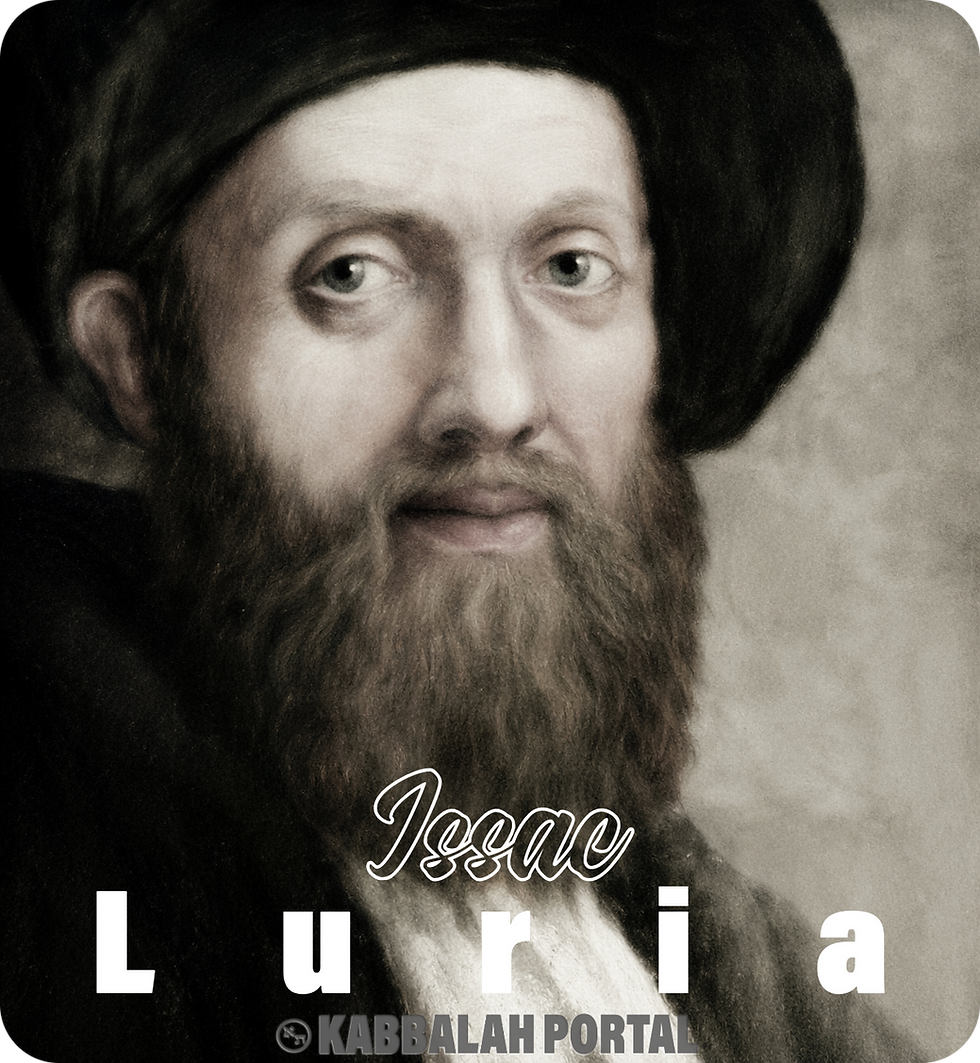
Rav Menachem Mendel of Riminov (1745–1815) was born in Przytyk, Poland, and became a central Galician tzaddik whose court in Rymanów trained a derech of governed receivability in matters of livelihood. His path matured within the early Chassidic current and he became bound to the circle of Rav Elimelech of Lizhensk, carrying a transmission that treated daily conduct as the primary כלי for Shefa (שֶׁפַע) (Flow of Provision). His teachings were preserved through students and later compilations associated with his legacy, including Menachem Tziyon (מְנַחֵם צִיּוֹן) (Menachem Tziyon), Divrei Menachem (דִּבְרֵי מְנַחֵם) (Words of Menachem), and later collections that gathered his derashot and guidance. Within this derech, Ruach (רוּחַ) (Spirit) moves through Dibbur (דִּבּוּר) (Speech), and Dibbur (דִּבּוּר) (Speech) shapes the form that blessing can inhabit, as the mouth functions as a gate and restraint preserves channel integrity under pressure.
Shemot 16:4–36 | The Manna Portion as Measured Descent
Shemot 16:4–36 reveals HaMan (הַמָּן) (Manna) as a measured descent of provision with instruction embedded inside the gift. The Torah stages this law in daylight so the soul can learn the circuitry of reception through visible inputs and visible outcomes. A portion arrives each day, and the portion arrives with boundaries that educate receivability. The Omer (עֹמֶר) (Measured Portion) becomes a geometry of intake that protects the vessel from rupture, and the narrative exposes a precise governance principle: when the hand reaches beyond the portion assigned for the day, spoilage appears, as tomorrow enters today as distortion and pressure overrides measure. Yom ShiShi (יוֹם שִׁשִּׁי) (The Sixth Day) introduces a doubled portion for Shabbat (שַׁבָּת) (Shabbat), revealing Shabbat as a higher receptacle where time itself functions as a vessel, and preparation aligns the week with Shabbat’s reception state.
Shenayim Mikra Ve’echad Targum | Three Passes as Engraving
Shenayim Mikra Ve’echad Targum (שְׁנַיִם מִקְרָא וְאֶחָד תַּרְגּוּם) (Two Readings of Mikra and One of Targum) enters from the sages as a disciplined completion of the parashah with the communal reading stream, through two readings of Mikra (מִקְרָא) (Scripture) and one of Targum (תַּרְגּוּם) (Aramaic Rendering). Two passes of Mikra establish engraving, as repetition fixes the letters as formed imprint within the auditory vessel, stabilizing attention and tightening fidelity of reception. The single pass of Targum functions as Levush (לְבוּשׁ) (Garment), clothing the same content in the language layer that interfaces with lived reality, where timing, exchange, and daily decisions operate. The three passes carry structural weight in the language of the Mekubalim through the three column system, where governance expresses itself through expansion, restraint, and unification, and this method carries the verse through those phases as a single disciplined cadence. Parashat HaMan fits this method with exactness, as the portion teaches measure, boundary, and governed reception, and the reading method embodies the same law through disciplined repetition and clothing.
One Thought Bloc Technology | Machshavah Achat as a Shared Field of Alignment
One Thought Bloc Technology names a Kabbalistic engineering principle: when many souls initiate one agreed intention, a single thought field forms, and the participants enter a shared wavelength through Da’at (דַּעַת) (Integrated Knowing) and Arevut (עֲרֵבוּת) (Mutual Guarantee). Each individual acts as a node that emits the same inner instruction, and repetition across many nodes yields coherence, like a distributed clock that synchronizes the network.This resembles Hitkalelut (הִכָּלְלוּת) (Inter-Inclusion), where distinct vessels participate in one composite pattern while retaining individuality, and the collective becomes a unified channel for receivable Shefa (שֶׁפַע) (Flow of Provision).
Science offers parallel descriptors for coherence across many agents. Entrainment describes how oscillators lock phase when they share a repeated signal, like a tuning fork transmitting a precise frequency into the air and drawing nearby instruments into sympathetic vibration until many distinct bodies carry one stabilized tone. Synchronization theory describes a phase transition where a network moves from scattered timing into unified timing, increasing stability and reducing noise. Information theory describes redundancy as a fidelity mechanism, where repeated transmission raises signal clarity and reduces distortion. Contemporary speech calls this quantum entanglement, and here it serves as a metaphor for nonlocal coupling through shared consciousness, where distance yields to simultaneity of intention and the inner broadcast behaves like a communal signal. A global act of reading installs one cadence across many mouths, many ears, and many inner fields, producing one aligned stream of desire that carries a single instruction through many vessels.
“And beforehand, livelihood will not be lacking for a person. Whoever recites Parashat Haman each day, so our sages of blessed memory said. With the recitation of the passage, one says ‘Yehi Ratzon,’ and it is permitted to recite Parashat Haman even on Shabbat. However, the prayers that are specifically about livelihood are not said on Shabbat.”
Want to explore this concept more through an Experiential Learning Practicum?


Comments